Boffo Beer Blog, Week 3 : Shiner Frost

This week it was time for a bolero and cowboy hat as I downed one of the quintessential Texas brews. Well, actually I wore no hat nor string tie, but there’s no exaggeration to say that Shiner is a brand as synonomous with the Lone Star State as cowboy boots, long-horned cattle and oil rigs. I sampled one of their seasonal, winter beers – Shiner Frost.

Shiner is the label name for Spoetzel Brewery and the town it’s located in. The small town between San Antonio and Houston has become something of a tourist attraction because of the beer, promoted in the state with a series of witty TV ads. Unlike the two Michigan breweries I’ve looked at so far in this series, Spoetzel has a lot of history. It was founded by Kosmos Spoetzel in 1909, Somehow it *ahem* even seemed to come through the Prohibition years A-OK.

Despite the popularity of the brand (now making over 6 million cases a year), it’s stayed in Shiner and every drop of their various brews come from that one spot. And a wide range it is. They are best-known for their Bock, which they note means “goat” hence the ram on their packaging, but they offer some other year-rounds including a Black lager, a light blond lager and Ruby, a grapefruit-infused lager. Although their bock seems like it would be a strong brew (as anyone who’s had authentic German or Dutch bocks would assume), it comes in at just 4.4% alcohol and a decidedly lighter flavor than its Euro cousins, seemingly in keeping with Texan tastes which seem to run towards beers lighter both in taste and alcohol strength.

As varied as those are, the more interesting choices from Shiner are typically the limited-time seasonals, such as a Pecan porter and a Smores-flavored one, both part of their winter package. The one I tried, Frost, is also a part of the winter sampler from them.

Spoetzel describe Frost as a “Dortmunder Style” beer. Dortmunders were originally brewed in Dortmund, Germany, and are closer to pilsners than anything else, although a little maltier and darker than most pilsners. The Texans go on to say Frost is a “deliciously distinctive seasonal (which) brings a hint of malty sweetness that quickly fades to show a crisp, hoppy character” perfect for frosty days. It comes in at 5.0% alcohol, about average overall but surprisingly a bit higher than most of the other offerings in the Shiner family.

This weekend, I opened the 12-ounce bottle and found it had quite a head when I poured it, although that quickly dissipated. It was a little cloudy and a deep golden color, as it were indicating what it was – a slightly more robust version of a normal lager.

I had it with some piping hot pepperoni pizza making for a nice late lunch. Now, perhaps like you, I’ve never been all that clear on the differences between the terms breweries love: “malty” and “hoppy.” But seems like the malty comes from the grain – wheat beers, for instance taste discernibly different than ones made from corn – and relate to how “smooth” the beer tastes and how sweet. The hops on the other hand, give it the character and bitterness (or lack of.)

Well, my first impression was of a rather ordinary beer but a little bitter. Seconds later, it actually seemed to leave a more bitter aftertaste. If there was a malty sweetness, I missed it.

Now, that’s not to say it was a bad beer. Not at all. It’s flavor and texture were decent, and preferable to some of the really watery light lagers so favored in these parts. But the aftertaste was a little on the strong and bitter side for my liking and it didn’t pair that well with the tanginess of the pizza sauce. I’d say this might be a beer better suited for having with a lighter, blander snack like plain potato chips or microwave popcorn.

Not a bad drink, but not one that stands out enough to make me likely to choose it again when there are so many fine brews out there left to sample. Overall, I give Frost a 6 out of 10 for flavor, 6 out of 10 for strength and


goatgoatgoat

three out of five billygoats!

‘Me’ And The Reading List

Well my year’s reading list is off to a good start – I just completed the first book of 2020, the much-publicized Me by Elton John. I’ve been a fan of John since I was a small kid (which coincided with the peak of his chart domination in the early-to-mid-’70s) so it held obvious appeal to me. Happily the kiddo got me a copy for my birthday late last year and once I started into it, I couldn’t put it down. Well, technically I did put it down, many times, but still, reading the 340-ish page autobiography in a week was fast work for me and an indication of how interesting it is.

Elton reveals many surprises about himself in the book but perhaps the biggest surprise to the reader is how little he actually talks about his music. Although he does mention briefly the inspirations for songs like “Philadelphia Freedom” and “Someone Saved My Life Tonight”, he spills very little ink actually analyzing his records or giving detail into the writing or recording process. What he does do though is give the reader great insight into what his life was like during the various time periods – and he pulls no punches.

The flamboyant singer hides little if anything of his troubled life, from his rocky relationship with his temper-tantrum throwing mother (whom he credits for his own bad temper) to his cold and distant father to the years of trouble caused by cocaine and over-drinking. He admits to feeling lucky he didn’t catch AIDS and succumb to a fate like Freddie Mercury (one of a number of close friends in music he shares stories about) and is able to mock his own lavish lifestyle which very nearly drove him to bankruptcy despite being one of music’s most successful and biggest-selling artists. The book is part anecdote, part cautionary tale.

Happily it’s also part redemption story. It might have taken him 60 years or so, but John (now 72) seems to have put his life together quite well and sort his priorities better than he did when young. He’s married, sober and a doting father to a couple of boys, for whom he apparently wrote the book.

Definitely a worthwhile read for any Elton fan, or for anyone looking to see what lifestyles of the rich and famous were like in the disco era.

Boffo Beer Blog, Week 2. Founder’s Get Dirty

Well, another week, another flavorful brew from the Great Lake State of Michigan, odd since I’m about 1000 miles from there! This week I try Founder’s Brewery’s Dirty Bastard Ale … pardon the French, I didn’t name it, only drink it! Apparently there’s a lot going on up in the Automaking state.

A little background info finds Founder’s isn’t quite as old as Bell’s we looked at last week. Founder’s began in Grand Rapids in 1997. A couple of friends started it in a 9600 square foot brewery in the city center, and began brewing… run of the mill beers. A year later, they opened their own taproom in the building to sell their drinks, with the two owners doing double duty as bartenders. It was a hit…not.

They teetered on the verge of bankruptcy for a year or two before making a bold decision about bold beer. Simply brewing ordinary lagers that taste like every other big beer in a small building isn’t cost-efficient nor a way to distinguish themselves. In 2001 they decided to go big or go home – brew beers with “complex flavorful ales with huge aromatics and big body.” Not your daddy’s Pabst Blue Ribbon.

Things turned up for them after doing that. In 2004, their KBS was voted the second-best beer in the world by publication Beer Advocate. A couple of years after that, they were selling in the Carolinas and New Jersey as well as their home state. By 2010, they had 69 new employees, by 2015, over 300 more. In 2017, they opened a second taproom in Detroit. The bars host live music and trivia nights to enjoy while sipping the brews.

The brewery now puts out a wide range of beers, some seasonal , some year-round. They have stouts, “Brut” IPAs, even breakfast stouts and espresso-tinged ones. The one common element: strong, rich tastes unlike the multinational lagers. I’m impressed with their commitment to environmental issues, them being a supporter of charities like the Conservation Alliance and Grand Rapids Parks as well as attempting to make their buildings energy-efficient with initiatives like using hot water from brewing to help heat them.

Things got better for Founder’s when they decide to brew beers that had “personality” and Dirty Bastard was one of the ones that turned it around for them. They began brewing it in 2002 and it’s now one of their mainstays. A strong 8.5% alcohol, this is not for the faint of heart, beer-wise.

I popped open a 12 ounce bottle with a late lunch of some take out fried chicken and fries and a strong jalapeno. The first thing I noticed was how heady it was when I poured it and the deep red color. It reminded me a bit of Rickards Red, a tasty bev I favored back in Canada, but a bit darker. Definitely unexpected in an American brew anyway. The brewery describe it as “seven varieties of imported hops complex in finish, with hints of smoke and peat paired with a malty richness.” I don’t know exactly what peat is supposed to taste like (and “mossy” doesn’t explain it away much better) but this was a surprisingly smooth beer. The seven hops certainly gave it a strong flavor but it was smooth and not very bitter. In fact, much like last week’s choice, this one had some sort of sweet underlying taste – a touch of Michigan maple or chocolate even perhaps.

Again, a strong beer that seems perfect for a winter night or with a hearty hot dinner, or perhaps even to have with a nice warm slice of apple pie; probably not the drink for a hot summer afternoon when you have things to do still on the agenda or if you prefer your beers to imitate the contents of one of those thousands of clear Michigan lakes.

All in all, I give it 8 out of 10 for flavor, 7 out of ten for strength (8.5% is nice but means often one is enough!) and overall,

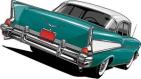
chevychevychevychevyhalfchev


four and a half Hot Rods out of 5!

Boffo Beer Blog, Week 1. Bell’s Best Brown Ale

Earlier I was mentioning that reading more was one of my resolutions (again) for this year. Another resolution is to try a new beer every week. I’ll keep you filled in and reg”Ale”d here as we sip through the year.

Now, I’m not what most would consider much of a drinker – I’ve never even had a margarita and probably last had a bottle of rum or vodka around the time Nirvana were the new kids on the musical block – but I do like beer. Rare is a good dinner I have without having a cold one accompanying it; likewise sitting watching a baseball game isn’t quite a hit without a nice chilly lager or ale. I’ve always enjoyed trying different varieties, but like many others, I find myself in rather a routine of drinking one of the national brands that are readily available, cheap and pleasing enough but rather a boring quaff compared to the hundreds of different types of more flavorful and exotic labels on the supermarket shelf here (or the stylish LCBO ones back in Canada.)

So in 2020, I’m going to give a go to at least one new, less common beer each week and I’ll give you my thoughts on it, and maybe a little background. I’m no cicerone – I had to look up what the term is for a beer enthusiast in fact – but I know a good one when I taste one and can at least tell the difference between say a Coors Lite and a Guinness. So I hope my comments will be of interest to you and maybe get you to experiment a little more with your sudsy savorings.

So, this week I started with Bell’s Best Brown Ale. I mean, if you start something different why not start with the “best”?

I was drawn to it because I like dark ales. And I like owls, and the beer features a nice wintry picture of a Great Horned Owl on the can. I picked up a 12 ounce can, but I’ve seen it on shelves in bottles as well.

Well “hooo” is Bell’s Brewery? I found it is a Michigan microbrew founded in Kalamazoo in 1985, two years after founder Larry Bell had begun a home brew store. His first beer sold was a Great Lakes Ale he made up in a 15 gallon soup pot! By the early-’90s he had expanded and become the first Michigan brewery with an on-site pub and restaurant, all the better to enjoy his expanding range of beers. The company has expanded its brewery several times and offered a range of different beers through the years. One consistent thread for them seems to be that they prefer to offer darker, heavier beers, rather an anomaly in a state known for light, watery even, lagers. They’ve put out a bock, a stout, a white ale, and their “Two Hearted Ale”, a brew picked by the American Home Brewers Association as the Best Beer in the U.S.A. in 2017, not long after they’d expanded to Texas and other south-central states and topped 300 000 barrels a year in sales, or about 70 million bottles per year.

Best Brown Ale began in 1988 and is described by the brewery as a “smooth toasty brown ale with hints of caramel and cocoa.” they add it’s brewed with American hops and “best enjoyed with the changing of the seasons.”

So, I popped open the can and had it with a winter’s day lunch. The color is a nice, dark rich coppery color. It made a little bit of a head when I poured it, but not much. Certainly not a “fizzy” beer.

It tasted very good. At 5.8% alcohol, it’s a bit stronger than typical beers, but not a real strong one, and it tastes accordingly full-bodied. This packs a lot more of a kick than a multinational lager, but it’s not overpowering in taste nor does it seem overly heavy or likely to weigh you down. While it didn’t seem overly bubbly, it also didn’t go flat in the time it took me to eat lunch and enjoy it. The flavor was unmistakable as an ale – if you like your beers watery and light, this isn’t for you – but while it had a bit of a pleasant hoppy bitterness I could also detect a little, subtle sweet aftertaste. Maybe that’s the caramel they mention although to me it seemed more like a fruit flavor, although I’m not sure precisely what one.

All in all, Best Brown Ale may not be the best ale out there but is a good one. While I had it with a turkey sandwich and some veggies for lunch on a mild winter day, it seems like a perfect drink to go with a hearty stew or tasty roast dinner on a winter’s night, or maybe to be enjoyed with someone special in front of a roaring fire.

A good start to the project. I give it a 7/10 for flavor, 7/10 for strength and overall ,

hootiehootiehootiehootie

4 hoot owls out of 5!

Reading Is Contagious?

I mentioned at some point last year that one of my resolutions was to read a bit more than I had the previous year. Well, while struggling to bounce back from an unwanted Christmas gift of the flu, I finished off the appropriately-named Contagious by Jonah Berger. Despite the name, it had nothing to do with my ailment or any other disease.

The Berger book is another pop psychology type effort which he acknowledges was inspired in no small part by Malcolm Gladwell’s The Tipping Point . Berger looks at some “viral” pop sensations and tries to dissect what it is that makes them popular and much-shared, from the story of a $100 sandwich to growing moustaches for charity. He theorizes that if people follow his formula, including making stories that appeal to strong emotions and make the person telling it seem smart or “cool”, that they can make their own videos or ads become wildly popular.

Whether or not he’s got the formula scientifically figured out, I don’t know. But the book itself is an interesting enough read. What it doesn’t have though is the charm and way with words that Gladwell’s works have which make a lasting impression and makes it one of those tomes you just can’t put down. Nonetheless, it is worth a read and if you are looking to start up an advertising campaign or promotion it just might be “the tipping point” that makes it a winner.

Contagious marked the 13th book I read in 2019, actually one less than 2018. For the record, while I liked all the books I consumed, Freakonomics was likely my favorite non-fiction and Younger my favorite novel… unless I count Grace, Fully Living which I really liked. Of course, I also wrote that one, so I’m a bit biased!

So enter 2020 and a hold-over resolution from last year, once again I aim to read more than I did last year. Elton John’s biography Me is getting me off and running – or actually sitting and reading – towards that goal.

Whether you read one or 13 or 113 books this year, I hope you’ll find words which will entertain and inspire you in 2020…and when I do the same, I’ll let you know here.

Waking Up to The New Decade

It doesn’t feel much different today than it did last week, but of course it is. Welcome to the 2020s.

Of course, in reality very little is yet different just because the calendar has been switched. But there’s the mindset. The perception that things could be different. So strong is that urge inside of us that “any resolutions?” is right behind “do you want another drink?” as the most common of late-night December 31st questions around the world. Which leads to Greta Thunberg.

A year ago, most of us had probably not heard of Thunberg. An anonymous, surly Scanadanavian teenager. A year later, she’s Time magazine’s “Person of the Year”.

Many were disgruntled by this. An article displayed prominently on Yahoo News asks “who better than a finger-wagging teen bereft of accomplishment, or any comprehension of basic economies or history to” be so honored. “Has there ever been a less consequential person to be picked?”

My first reaction was essentially the same. In some respects, the President of the U.S. nearly deserves the award by default every year, because good or bad, few influence world events nearly as much, year in, year out. As such Donald Trump would have been a worthy person to be named. After all, he’d been on the magazine’s covers seven times during the year. Of course, if he had won the “honor”, many would have been quick to rein in his bragging by reminding us Hitler and Stalin had also been named “Persons of the Year”.

Many thought the “Whistleblower” who reported Trump’s call to the Ukraine which spiralled into the Impeachment hearings would be the appropriate person. Up until his or her report about the president’s iffy phone call, no matter what he said or did in the White House had carried repercussions with them. That all changed with the “whistle blower” who would make Trump the third president to be impeached. That’s quite a role in history! And it’s worth noting, un-named “whistle blowers” had been honored similarly by Time in 2002.

I thought Boris Johnson was an apt winner. The Brit with hair and a lack of caring about convention to rival Trump’s had in only three years gone from Mayor of London to a national politician to an appointed Prime Minister to a PM with a strong majority mandate supporting his drive to “Brexit.” Preumably he’ll take the UK out of the European Union and throw a monkey wrench into plans to have, and expand, one united continent/country. That’s pretty major as well.

Thunberg, on the other hand, was a quiet, rather ordinary (albeit slightly Autistic) Swedish kid who turned 16 during the year. She’d come to some attention in her country suggesting kids express their concern by skipping school. Shockingly, that caught on. Before you knew it, she was addressing world leaders and globe-trotting with her “finger-wagging” and message about the perils we are putting the planet in by ignoring climate change and refusing to change behaviours. “You say you love your children, and yet you are stealing their future in front of their very eyes” she says. Surprisingly she’s found sympathetic ears among the highest offices in countries like France, Canada and her own Sweden. governments are beginning to change policies because of her chastising and more and more of her counterparts from around the world are starting to speak up as well.

I have to admit, I find her a bit tedously sanctimonious. But while we can debate the minutae of the numbers, it is obvious that we as a species can’t continue to deplete the planet’s resources and burn all the fossil fuels in the way we have been for the past six or seven decades.

I remember being passionate about the environment when I was Greta’s age. Signing petitions, writing letters, feeling a comradarie with others of my age and interests. People of my parents’ generation undoubtedly looked on with fond memories of their own Hippie youths.

That’s something that seems all too lacking in most of today’s youth – the rather interchangeable “Gen Z” and “millennials.” All too much it seems like they’re passionate about video games and upgrading cell phones and not a whole lot more. A number of them seem reluctant to even go outside, let alone look at the world beyond their screen and ponder its future. Which is what makes young Greta special.

It’s a new decade and we should feel like the “future is unwritten”, to quote Joe Strummer. We should feel like the future is going to be better and change can come about. But that won’t happen by sitting on our hands and waiting for it to happen. So here’s to Greta Thunberg for doing her bit to make sure we don’t do that.

One Person, One Vote – Is That Rocket Science?

My old homeland recently had an election, and to little surprise, Justin Trudeau won re-election and will continue to be the Prime Minister of Canada. Although perhaps there was a little surprise at that. Trudeau’s governing had been marred by political scandals as well as personal ones related to his fondness for dressing in Halloween costumes using “blackface” makeup. Debatable as to a costume choice, but certainly not a good look for a politician leading a party which bases most of its policy on social inclusiveness and tolerant multiculturalism.

Perhaps a little surprising as well, the fact that although he and his Liberal party won the election, Andrew Scheer and the Conservative party got more votes than the Liberals. The Liberals scored 5 916 000 votes, or 33.1% of the total. Scheer’s Conservatives, 6 155 000, or 34.4%. And no, your math skills haven’t taken a hit since you left school – the two don’t add up to 100% since Canada has a couple of other popular parties plus a regional one of some account in Quebec.

Of course, the pattern is familiar to Americans. Let’s remember that in 2016, Donald Trump actually was voted for by 62 980 000 or so folk; Hillary Clinton by 65 845 000. Yet we know who got to go to the White House.

It seems weird at first that if the popular vote was what counted, “liberal” Canada would have a right-wing, Conservative leader and to the south, the “conservative, Christian” USA would be being led by a liberal woman. That’s a bit of a simplification though, as in Canada, the left-wing part of the populace has three parties to choose from, the Clinton-esque Liberals, the Bernie Sanders-inspiring NDP and the AOC-style Green Party. Together, they represented nearly 60% of the Canucks. Still though, it somehow seems wrong, doesn’t it?

The difference is caused by the route to leadership in both countries. In the U.S., the Electoral College is the way the prez gets chosen, and that’s no exact representation of voter preference for two reasons. First, states are disproportionately represented. Even the most sparsely populated states have 3 of the 538. Wyoming, for example, gets 3 Electoral College votes, with its population of 570 000 (about the same number as the city of Memphis). that’s one vote for every 190 000 residents. Fiery California, meanwhile hosts 39.75 million people, but has just 55 votes, or one per 723 000 residents. Hardly fair that, if we believe in “one person, one vote.”

Secondly, the states by and large give their votes in an all-or-nothing fashion to the winner. It makes no difference if the candidate scores 50.1% of the ballots or 99%… they’re going to get all the Electoral votes. Candidates who lose some of the very closely-contested “Swing states” by a narrow margin, but win their states by a landslide get discriminated against. Result – twice this century already, a President not chosen by the majority of American voters.

Canada’s system is not that different. There are some 338 “ridings” and each one “votes” for the Prime Minister based on whoever won the local vote. Again, some politicans (in this year’s case the Conservatives) win some seats by a landslide and lose others by the narrowest margins, but like the American system, a win is a win is a win. Even when it means the candidate with fewer votes gets elected.

I’m not a political science student but it seems to me that a system which results in the candidate with fewer people voting for him or her winning rather regularly is not a good, working system! So I offer a simple solution. America, let the candidate with the most votes be President. It doesn’t matter if he wins Florida by 100 votes and there are hanging chads, or if 88% of Wyomingians pick him, if the grand total doesn’t favor him, he’s not president.

Canada, similar suggestion. First off, have a separate box to fill in for “Prime Minister”. Right now, it’s done by a rather convoluted system where you vote for your local candidate and if they win their riding, they in turn vote for their party leader to be the boss. Vote for your local parliamentarian, yes, but also vote separately for PM. And have the one with most votes win. Simple.

And while we’re at it, another common sense suggestion. Isn’t a politician’s loyalty supposed to be to first, their country, then the local constituents and only after that the party? Seems like much of the time, those priorities are reversed these days, with leaders (and here we’re not only referring to Mr. Trump although it certainly is applicable to him) seemingly bullying their underlings in Congress/Parliament to vote according to the Head Honcho’s wishes, not their own beliefs or constituent choices. Could this not be fixed by having votes on important issues – raising taxes, imposing tariffs, changing laws, impeaching presidents and so on – be done by hidden ballot? Give the politicians a ballot with a Yes/No box to fill in at their seats and have them folded up and put into boxes. Or for the millennials out there, have them swipe their phones left for “yay”, right for “nay.”

This isn’t about Donald Trump, nor Justin Trudeau, specifically. It’s about a system which is supposed to be democracy hardly recognizing the will of the people anymore.

Younger : Redmond Vs Star

My latest reading for the year was an interesting novel – Younger by Pamela Redmond (2019 edition). It’s interesting for two reasons. First, the story itself is intriguing and captivating. Second, and perhaps more interestingly, because it was the foundation of the cult-hit TV show of the same name. Actually, it’s rather interesting for a third reason too… the copy I had was extensively “updated” from the original 2005 version which won Redmond fame and a TV contract, with the characters brought into the here and now with plenty of modern-day references like I-phones and Grindrr apps. (By the way, dear readers no, I don’t have any plans to do the same to my book, Grace, Fully Living to leap Grace ahead two decades.)

The basic premise of the story, both on printed page and on the TV screen, is that a recently-divorced 40-something woman decides to go back to work after spending the past couple of decades at home, being a homemaker and mother to a girl who’s now college-aged and overseas. She finds it difficult to resurrect her once-promising career in publishing, and senses that bosses think her too old and inexperienced to be useful. Enter her best friend, Maggie, an avant garde lesbian artist, who goads and helps her into trying to look, dress and act younger… 26 in fact. With the new attitude, wardrobe and fuzzy resume, she gets back into her old field and finds new romantic interests. Of course, she lives in a constant low-level sense of fear with so much riding on her being assumed to be a perky young Millennial rather than a middle-aged mother.

The show on TV Land is now in its sixth season, with plenty of twists and turns in both her work life and love life. The book however, is narrower in range, covering just the first year she attempts to pull off the “younger” life. It’s one of a number of differences between the two. This part made it all the more interesting to me, as seeing the finished on-screen product, it was cool to see what the writers kept and what they altered from the original template.

*SPOILER ALERTS FOLLOW*

As I said, many things are the same… the basic facts of the heroine, her attempt to pull off being almost 20 years younger, her young love interest in Josh, her picky and prickly boss at the publishing house she goes to work at, her daughter’s mercurial nature and eventual return from charity work overseas, and Maggie. For all the similarities, there are differences aplenty.

Even the names have been changed. Our protagonist we all know as “Liza” on TV is Alice in the book. Her work friend played by Hillary Duff on the show is known as Kelsey there; Lindsay in the book. Other names are altered, although one which isn’t  Charles. The handsome boss on TV is… Mrs. Whitney in the book? Actually, his character doesn’t exist in the novel, with the boss being an aging feminist writer whose only interest in Liza/Alice is her ability to come up with modern covers and prologues for their catalog. Happily for Josh, no rival for the heart of our heroine appears on the pages. Meanwhile, Maggie is obsessed with becoming a mother in the book rather than finding a hot new lover, as the TV version is. Last but not least, her book stint at the publisher is abbreviated rather than years-long and elevated. She does however, find something creative and useful to do after the job in the book. You’ll need to read it to find out what that might be.

In short, the TV show centers largely around the dilemma of Liza needing to choose between the two loves – the age-appropriate (for 26 year old Liza) and fun Josh, or the age-appropriate (for by now close to 50 year-old mom Liza) successful and polite Charles. And, how far Liza and Kelsey can take their own division of the company with its “Millennial” titles.

The book, on the other hand, revolves around the conflict within Alice as to whether or not to follow her heart about Josh, whom she feels deep down too young and too likely to be disappointed in her down the road and the themes of motherhood played up by the ironic contrast between her and Maggie. She has spent much of her life being a mother and suburban housewife and wants to cut loose a bit; Maggie’s spent her life being wild and living the downtown life, now she yearns for something more domesticated white bread and apple pie.

Which version works better?

Both are quite entertaining and at least enthralling enough to keep one turning the pages or turning on the TV week after week. As Redmond says in the epilogue, “when you sell your book to TV or movies, you sell the rights for them to do whatever they want to your characters and stories.” She adds she loves the show and thinks Darren Star has “stayed true to the characters and spirit of the book while making some great additions.” That he has, and necessarily so. If true to her original book, Younger might have made an interesting movie but would never have the legs to run a show with episodes running for years.

All in all, a good enough book which will be all the better for fans of the show.

You Can Toy With This Museum

Disney likes to say that Disneyland is the “happiest place on Earth.” If indeed the happiest place is in Anaheim, the runner-up may be in Rochester, NY… The National Museum of Play, which includes the Toy Hall of Fame.

Many of us probably had no idea there was a Toy Hall of Fame, but hey…if everything from bowling to darts to aviation having their own, why not something that “play” such an important part of most of our childhoods?

The Toy Hall of Fame is a part of the Museum of Play, which began in the 1960s as “The Strong” – the Margaret Woodbury Strong Museum of Fascination. The 156 000 square foot building has added exhibits and wings since and in 1998, someone had the idea for the Toy Hall. They aim to recognize toys which are icons, being widely recognized and remembered; exhibit longevity and promote learning or discovery. They give bonus points for those which are seen as “innovative.”

The first year, they inducted 11 toys which are about as classic as they come: baby dolls, Barbie dolls, Crayola crayons, erector sets, Etch-a-sketch, Frisbees, Lego, marbles, Monopoly, Playdoh and teddy bears. Since then they’ve added in some 57 more including Atari game systems, Big Wheels, checkers, Dungeons and Dragons, GI Joe dolls, Gameboys, rubber ducks, and View Master. A handful of more “out of the box thinking” toys have made it in too, like blankets and sticks!

The newest additions last year were the Magic 8-ball (it could’ve told you it’d be in if you asked it!), Uno and pinball machines. This year they’ll add two or three more from a list of nominees including Jenga, Care Bears, coloring books, Risk, Matchbox cars (which you might recall, if of a certain age, actually were sold in “matchboxes” at one time), the Fisher Price corn popper, and most controversially, Smart phones. I’d never heard of the corn popper, but recognized it as soon as I saw it, the little push-along on wheels developed in 1957, which the Hall says was not only fun but promoted motor skills and curiosity.

I’ll be pulling for the coloring books and Matchboxes (the racier Hot Wheels already made it in), parts of my childhood memories to be sure. I think back to my childhood and the toys I remember mostly, that I spent the most time with and got the most out of were toy cars like Hot Wheels and Matchboxes and Lego. Sometimes they’d go together, with me building buildings and driving the little cars between them. I loved the futuristic designs and bright metallic paints on the Hot Wheels , which could be raced on their trademark orange tracks as well, but also loved the realism and attention to detail of the Matchboxes. Although it bothered me immensely that they weren’t all to scale. A giant dumptruck or Greyhound bus Matchbox were the same length as a Volkswagen or Ford Capri. I rationalized that the Greyhound should have been about three times as long, because… well that’s the type of four year old I was!

I particularly liked Lego. Lego back in the ’70s was a bit different than most of it today. I mean, sure the bricks snapped together and came in bright colors as they still do but back then, they just came in big assorted boxes. I loved using my imagination to put together houses of my dreams, with the windows and doors where I wanted, the architecture my choice. Many a cold winter afternoon was spent building up houses, towers or cities of the future on the living room floor.

There weren’t any Batman or other cartoon character Lego people and there were basically no blueprints. No rules or limits. When I pass by the kdis sections of stores these days, the Lego kits are all very detailed and specific. build this car or this spaceship or that home with the bricks in this box. Not one brick too many or too few, just follow the instructions. It bothers me that today’s kids, if they actually step away from the electronic screens long enough to pick up a Lego set, will have so little incentive to use their imagination.

Now, learning to follow instructions is important, no doubt. But so too is thinking independently and creatively. Using one’s imagination. Flights of fancy. I learned to follow rules and instructions just fine through school, family life, even toys which required careful attention to detail, like plastic models of trucks. Would be silly to have had the transmission on the cab roof or headlights on the back of the frame, after all. But I’m convinced toys like Lego helped me imagine things and create, tear down what didn’t work and feel proud of what did. those skills have made me a part of the person I am, the writer part, the photographer part. Probably the “interesting” part actually!

What about you, dear readers? What toys were important to you when you were a kid? How did they help you become who you are today.

I can only wonder if today’s youth will look back as fondly on Fortnite or Vine videos four decades from now.

Squad 51 Changed TV…And Society

TV shows are of course, first and foremost entertainment. But once in awhile they rise above just that and can actually create change for the better. Maybe even save lives. Recently, I’ve rediscovered one such show… and a lot of memories from my childhood!

Over-the-air station COZI-TV shows nothing but oldies. It’s the television version of a Golden Oldies radio station. Andy Griffin, Magnum PI, MASH… they’re all there. And recently, a fave of eight, nine-year old me, Emergency.

Emergency was the brainchild of Jack Webb, no surprise to those who had watched his earlier show, Adam 12. While that one watched the day-to-day routines of two L.A. cops, Emergency dealt with an L.A. fire station and the goings on within and on their runs. In particular, the show which ran from 1972-77, focused on two paramedics who although firemen, responded to medical calls and were trained in medical care.It was a very new idea for the public at the time. Roy Desoto (actor Kevin Tighe) was the blonde, easy-going one while his partner who set many a lady’s heart a-flutter (and would later be immortalized in a Tubes song) was John Gage, played by dark and brooding Randolph Mantooth. The rest of the firemen on their shift at “Station 51”, as well as the doctors and nurses of the local hospital ER were supporting characters. A plot outline not unlike Adam 12, with its two patrol car cop buddies who spend a lot of time discussing life and responding to nuisance calls interspersed with a few high-tension emergency calls.

On Emergency, we follow along with John and Roy as they deal with mundane, everyday issues like John’s insomnia or Roy’s wondering about where to take his kids on holiday, interspersed with a few siren-screaming runs to heart attacks and snakebites , and fewer still infernos to respond to and help people survive. Of course, like Adam 12, it was full of afros, moustaches and conservative morality… youth smoking “grass” laced with pesticides freaked out and confounded doctors with their life-threatening illnesses; doctors jumped in to keep lying parents from their frightened and bruised children while doling out counseling about dealing with stress. (It did, however, coming a bit later than Adam 12, miss out on stripy bell-bottom fashion and bad guys who said things like “you’re a jive cop!” or “say your prayers… I’m gonna send you to pig heaven, copper!”)

Part drama, part light-comedy, mixed with a small amount of action… it’s a far reach from the action shows and movies that are in favor now. But somehow, it worked. We cared about the characters lives… and learned.

Emergency was made by sticklers for detail. The exterior shots used a real L.A. fire station (Station 127 in Carson) and a real hospital nearby. Producers got to borrow an authentic L.A. pumper truck (Engine 51) and apparently, on a few shots forgot to relabel it as such, meaning the eagle-eyed viewer could sometimes see Station 51 responding in a differently-numbered truck. Driven by an actor, Dick Hammer, who played Dick Hammer. You see, Hammer not only used his real name, he played his own role in real life – he was an actual L.A. fireman, thus having fire training and a license to drive the large vehicles.

Roy and John, the paramedics, went to their medical calls in a modified pickup with all sorts of medical supplies, and radios to the hospital. The trucks were new and few and far between and L.A. couldn’t loan them one, so the show got the blueprints and built an authentic replica themselves, and stocked it with the real equipment the true first responders used in the day.

It was interesting. It gave us a look at the ordinary work of fire-fighters and paramedics and some of the crazy calls they had to deal with. And in a small way, it changed the world.

Not only did Emergency pave the way for later, more action-packed shows like E.R. and Station 19, it changed society as well.

ME TV point out that when the show first aired, there were only 12 – one dozen – fire departments with paramedics in the entire country. L.A., Seattle and Miami were the only notable large urban areas with them at the time. What’s more, ambulances were largely taxis for sick and injured people. The personnel on them did little besides get the patient to doctors and help down the road. By the end of the show in mid-’77, fully half of all Americans were within 10 minutes of responding fully-trained paramedics. Lives were saved…. and one has to imagine that Emergency was behind it. It’s hard to innumerate, but oral history suggests a lot of fire departments and city councils got on board to train their firemen and supply them with medical gear when people started wanting their town to have its own John Gage, Roy Desoto and Squad 51. EMS World call Randy Mantooth the “goodwill ambassador” for their profession and point out “for all the popularity of classic shows such as the Honeymooners and Gunsmoke, the number of people they inspired to become bus drivers or sherriffs was probably small.” Not so Emergency. Schools offering the training to be paramedics saw a surge of applicants shortly after the show premiered.

Pretty cool. A show that changed history and made life safer. And still is interesting to watch 40 years on. Methinks we’ll never be saying that about the Kardashians.

Design a site like this with WordPress.com
Get started