Everydave Life Hero Of The Year 2020 : Dr. A. Fauci

Why wait for Time magazine? While they are collecting suggestions for their “Person of the Year”, here at Everydave Life, we’re ready to announce our winner. Ta-da! We’re happy to announce our First Annual Everydave Life Hero of the Year for 2020 is…

Dr. Anthony Fauci.

When we look back at 2020, two things will probably long be seared into our memories : the pandemic and Donald Trump/the presidential election. Fauci was a beacon of hope in both news stories.

In case you’ve been lucky enough to have hibernated through most of this year, Fauci is one of the country’s leading doctors who suddenly vaulted into the public eye this spring as a member of Trump’s Coronavirus advisory team. He grew up the son of a couple of pharmacy-owners in New York, loving sports and medicine. As we saw at a Washington baseball game this year, we’re all lucky he chose medicine, becoming a doctor in 1966.

Before long he’d worked his way up to the position of the Director of the National Institute of Allergy and Infectious Diseases, around the time Ronald Reagan appointed him as a medical advisor to the White House, something he’s been with every president since, Democrat or Republican. The previous Republican president, George W. Bush, thought so much of him he gave him the Presidential Medal of Freedom. Fauci is, in the words of the New York Times, “one of the world’s leading experts on diseases.” He was important in pioneering the understanding of, and treatment of AIDS in the ’80s, and the fight against Ebola in Africa more recently. Little wonder he was an obvious choice to stand beside the president and try to inform the public this year when we were faced with the worst pandemic in our lifetimes.

Fauci was an inspiration during the dark days when Corona was beginning to conjure up images of something other than beer in our minds. He relayed information on what we all needed to do in order to stay safe and curtail the raging disease. He did so with a brilliant sense of calm, good humoredness mixed with deadly seriousness. A mix of the two things we needed to get through one of the darkest times in the recent history of Western society. Grace under pressure, something we assuredly did not see from the president or many of the other elected officials. He was on the mark far more often than not – he was an early advocate of wearing masks in public and social distancing for example – and would speak up and tactfully correct Donald Trump or others who gave blatantly false advice or information, such as suggesting the ingestion of household cleaners to cure Covid 19. For this, many extremists came to despise him.

If there was any doubt in my mind about Fauci being the type of individual we needed in charge this year, that was erased this fall when former-Trump campaign manager Steve Bannon (a man out on bond while awaiting trial on federal charges for fraud) called for his beheading, saying his head (and that of the FBI director’s) should be stuck on a “pike” as an example of what happened to anyone who disagreed with the president. We presume he meant “spike”, since a large fish would be very odd with a doctor’s head on it. Many would have fired back or called the police on the provocateur. Fauci merely looked a little perplexed and said it was “really kind of unusual” and that having “a public figure calling for your beheading …that’s not the kind of thing you think about when you’re going through medical school.” Grace under pressure.

Fauci will turn 80 this month but has agreed to be Joe Biden’s Chief Medical Advisor when he takes office in January. For that we congratulate both Biden and Fauci.

Anthony Fauci. A voice of experience, a voice of calm in the chaos. A voice who reminded us that it’s usually best to listen to science, not mock it. The Everydave Hero of the Year for 2020.

Cabooses To Cabovers – Missin’ The 70s!

I needed a new heel for my shoe, so I decided to go to Morganville, which is what they called Shelbyville in those days. So I tied an onion to my belt which was the style at the time…” – Grandpa Simpson.

…and we liked it! Getting another year older makes one think back, and when I think back I think of random things that were better when I was a kid. Like tying onions on one’s belt. And I’m not talking about obvious things, like pop hit radio or being able to call a girl a girl without risking a long lecture about gender fluidity, I’m talking about the inobvious things that have faded away with time. Three examples…

Cabovers. When I was a little kid, I loved big trucks. And most tractor-trailers were headed up by a type of diesel truck that was called a “cabover”. They were called that because the cab sat over the engine. Big, square, flat-fronted trucks. Peterbilt, Kenworth, GM, International, you name it. These rigs moved everything everywhere. When I was about five, my dad and I went to a car show and they had a Chevy one on display… a Titan 90, I think it was called (much like the one illustrated above). I got to go up – way up – and sit in the cab. Cool, what! 10-4 good buddy, what could be cooler than driving around the country in one of these, I thought, looking down – way down – on the crowd below. Well, turns out many things could be, but the design still looks cool. But makes one turn around and stare these days on rare occasions you see one. Kind of like a Hummer with a Biden sticker on it.

As much as little guys like me thought they looked cool, and you got a good look at the road ahead with one, they lost their other advantages soon after my hop up into one. First, riding right over the engine apparently made for a real rough ride, even with the driver’s seat on shock absorbers. And, to access the engine… well, that was a bit of a chore. You had to flip the entire cab up at a 90-degree angle to get at it. This doubtlessly took some effort to do and wasn’t good for the cup of coffee you might have beside the seat in that cab. And, in a crash, there was no buffer between driver and wreck. The type of truck you see today has it all over the cabover design, with the long hood hosting the engine and keeping the driver a good ten feet away from danger. The real reason the trucks changed though was not so much safety or comfort as government red tape.

For many years, the U.S. and Canada had strict regulations on the maximum length of a truck they’d allow on highways. Many of those regulations were set in the growth period immediately following WWII, when 24-foot trailers were common. When the truck back suddenly grew to 40′, freight companies were strapped to get clearance to run them. Cabovers shaved a good few feet off the total length, and allowed them to use the new, more efficient longer-trailers. But by the Reagan era, many of those restrictions were relaxed or removed altogether. Witness today’s commonplace, behemoth 54′ trailers. Witness the chaos they cause trying to get around a tight corner designed in the 1940s when a 30′ long Sears delivery van was the biggest vehicle. With the lack of size limitations, there was no longer a need to sacrifice driver comfort and maintenance ease and the long hood style took over. Peterbilt last built a cabover design in 2009. Japan and much of the EU still have tight regulations on truck length mind you, so foreign markets still boast quite a few new models of the old cabover design.

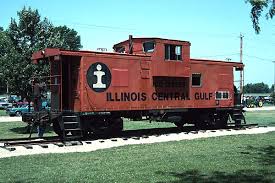
If the stuff wasn’t being moved on the roads, it was on the rails. And a train had a caboose. Another thing I miss.

I always loved trains as a kid. I grew up near a very busy CP Rail line that took cars from a huge GM factory nearby to everywhere, and brought in the parts they needed, as well as moved along everything else that was on the go between Detroit and Montreal, via Toronto. I spent many an idle hour in the park near us watching trains scoot by. The caboose went by and it was the end of the train. Simple. Most across North America were painted red, but the CP painted theirs a bright yellow-orange (a few other companies used different colors too; Union Pacific had yellow ones, Burlington Northern green, for example.) There’d be people inside the caboose, and as one local columnist put it recently, it seemed like their only function was to look out and wave at kids.

They actually had other jobs too of course. As Trains magazine point out, at one time many trains had crews of upto five people. They couldn’t all fit in the locomotive cab, besides which there was an advantage to having people bringing up the rear. They could look out and watch for problems ahead in the train – potential derailing cars, hobos jumping aboard – and there’d be people to change a switch back once the train had passed. To change from one track to another, the train goes over a switch, which moves the wheels smoothly to an adjacent track. Much of the time, it needs to go back to its original position to let the next train sail on through. Having a guy (for seldom were the workers women) back there to do so saved time over having one walk all the way back from the engine up front, do it, then walk back. The cabooses often even had a bed and kitchenette, because it wasn’t uncommon for the crew to make the run from say St. Louis to Denver by themselves.

Technology and economics took over and by the ’80s, were making the caboose irrelevant. Many switches became remote-controlled. Electronics were able to detect problems with the brakes or slipping wheels better than a man looking hundreds of yards ahead could. More trains were unit trains, meaning they ran straight through with a long load, not stopping at individual industries to pick up one car here, drop off a boxcar there. That required less manpower. Unions got shorter shifts and more crew changes, reducing need for overnight accommodations. A little device called an EOT – End of Train device – became available that would take electronic readings and flash a tail light in place of a whole 40-foot long, metal caboose with staff inside. By the ’90s, cabooses were largely a thing of nostalgia films and toys… remarkably most children still seem to know what they are somehow and like them attached to their toy trains.

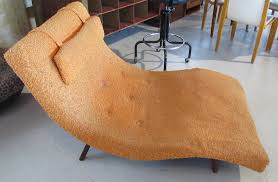
Toy trains perhaps played with in the living room. And that brings me to the third thing this Granpa Simpson is nagging about – mid-century modern, ’60s and ’70s furniture! Like the era, it was a mix of the old and the new; wood and velvet, metal and velour. Straight lines were fine for stereo cabinets or end tables but, I presume they figured, people weren’t rigid (except for ‘the man!’) so why should they sit on square furniture? When I was growing up, we had a great big plush yellow sofa, with rounded arms, and a rounded back. But the piece de resistance was “the lounge.” The lounge was the fave of my dad and I, a contoured, velour-covered mustard yellow soft chaise lounge with a built in pillow for one’s head. Yellow was big in furniture when I was a kid. I wish we had photos of us enjoying it; more I wish we still had it to enjoy!

This chair was the way to watch TV in comfort, not quite as lazy-seeming as lying around in bed, but all the comfort of a sunny day at poolside and then some! It was the perfect place to park one’s own “caboose” at the end of a long day carting an onion around on one’s belt!

Recent explorations by me have suggested the lounge was a product of a company called Pearsall which specialized in things of that sort. Unfortunately, recent explorations also suggest no one in the family know whatever happened to ours. Used ones still abound online… and cost an amount similar to the price of a new pickup that would be required to bring it home!

Scrublands Full Of A Lot More Than Just Snakes & ‘Roos

We’ve heard of “whodunnits”, but the most recent book I read is more like a “whydunnit”? Or so it would seem a couple of chapters in, but by the time we finish we’re not quite sure if it was a “whodunnit” mystery, a “why” one, a romance or a rural slice-of-life drama. Murder! Intrigue! Romance! Rural sociology! In the end, Scrublands turns out to be all of the above, making it quite a page-turner.

The 2019 novel was the fiction debut by Aussie journalist Chris Hammer, who seems to have learned how to tell a story well in his line of work. Like “lead with the hook.” He does that in Scrublands, where the most “action” happens in the prologue before chapter one begins. A small town priest gets ready for his Sunday mass and then, seemingly out of the blue, turns into a mass murderer, shooting people in front of his church for no apparent reason.

A year passes and a city newspaper sends middle-aged reporter Martin to look around the town and see how it’s coping. When he gets to Riverside, a small town that served as a stop on the highway and not a whole lot else, he finds it’s business as usual… as usual as business is going to be in a town of fewer than 1000 with few viable businesses surrounded by drought-stricken farms. But as he begins talking to the locals, he finds the more interesting story is trying to piece together the “why?”. Why did the relatively popular young priest turn murderous, why did some of his townsfolk get shot while others were spared? And of course, the “whats”. What did his rampage have to do with a couple of other murders nearby, if anything? What were members of a violent bike gang doing spending so much time riding through town? And most of all, what were townsfolk trying to cover up?

The answers to that fill the 300+ page book as Martin deals with the police, Australian feds cuiously interested in the goings-on and a number of local oddballs of questionable character. And, maybe, just maybe falls in love along the way.

It is a complex read at times, in that there are a lot of story arcs intersecting. Most of them eventually tie together satisfactorily and the whole story moves along at a brisk, entertaining pace.

An enjoyable book that resonates very well oceans away from ‘Down Under’… and seems to be begging for movie treatment!

What Is ‘A Sad Day For Television, Alex’?

“What is the passing away of Alex Trebek.” Correct for $600. Category is “2020 Bad News” .

I was sad but hardly surprised to hear of Trebek’s death yesterday. After all, he’d been publicly battling “aggressive” pancreatic cancer for almost two years and the survival rate for that disease is low, even for people much younger than Alex’s 80 years. But it was still a little shock and undeniably sad. He seemed to defy the odds and rebound so many times, both from this and the sickness the chemotherapy had caused, and from prior medical problems like blood clots and a heart attack. It seemed like it would be a Tuesday night we’d hear of Alex being in hospital and Wednesday morning he’d be on set, asking Judy, a nurse from Peoria, to name the Shakespeare play with MacDuff and Banquo, busy filming two weeks worth of Jeopardy.

Trebek was special to me for two big reasons. One, he was a fellow Canadian and one who showed some of the best qualities of our country, and two, because Jeopardy has for years been my favorite game show, and at times, a family ritual. He was synonymous with the show, and the show was a constant in ever-changing, often weird or unpredictable times.

Alex grew up in Sudbury, a mining city about a five hour drive north from where I grew up. It’s the nickel-mining center of the continent. My family took a trip up there when I was little. I don’t remember much of it other than the “Big Nickel”… which was, yes, a huge, over-sized sculpture of a five cent coin! A rough-and-ready, and at one time prosperous city, Alex outgrew it young nonetheless. He set off to Cincinnati to spend time with a girl, back to Canada to get a degree in philosophy and then to the CBC – the Canadian governmental national broadcasting network – to do everything from be a news correspondent to (briefly) rubbing shoulders with an older friend of mine on a music show, to most importantly, hosting a quiz show for Canadian high school students, Reach for the Top. Important because this in turn caught the attention of Hollywood, and soon he was recruited for a new version of a rather drab and at the time moribund game show, Jeopardy. Sure, Jeopardy had run on and off with hosts like Art Fleming and John Harlan on different channels and at different times through the late-’60s and into the ’70s, but it was far from a cultural hallmark … or even an ongoing entity when it was brought back in 1984, with Alex, big hair, moustache and all, at the helm. The rest, as they say, is history.

Week in,week out, for over 8000 episodes, Jeopardy tested our knowledge, and that of the three contestants a day, in topics ranging from “potent potables”, aka booze, to The Renaissance. River cities, men in black, famous last words, 1990s news, Shakespeare, shakes and spears… it was all in a day’s work for the show. Sometimes just guessing the topic the oft-mysterious categories were was half the fun! In an era when contest shows seem to rely on cheap laughs and ditzy contestants (a novel I’m reading neatly suggested “there’s a game show on. Martin can’t follow it; the rules seem too complex, there are too many flashing lights, too many glaring teeth.”) , Jeopardy stayed the course, steered clear of most flashy gimmicks (episode with IBM computer as a contestant notwithstanding) and rewarded often drab contestants with wide-ranging knowledge. At the center of it all, Alex Trebek. “Erudite” in the words of USA Today; “unflappable” in the opinion of NBC correspondent Harry Smith. Indeed, Trebek, who tested himself with all the questions before every game, seemed to suggest the types of qualities we Canadians generally admire. A quiet confidence and knowledge that mixes a slight detachment with a warm nature and a wry sense of humor. As Smith, who once took part in a celebrity edition of the show, noted, Trebek was “kind” and never overshadowed the game itself. The sense of humor? Months before his demise, Trebek was asked about a possible replacement as host. He answered “probably a woman. Somebody younger, somebody brighter, somebody personable. Somebody with a great sense of humor. So I nominate Betty White.” It’s said he laughed as much at the spoofing of him on TV variety shows and in Weird Al songs as we did.

I’ve not been a huge fan of game shows overall, though I’ve caught most of them along the way from The Price is Right to Family Feud to Ellen’s Show of Humiliating Contestants (I think it’s called). Mildly interested in a few, annoyed by many. Too many fools being showcased, too many rewards to whomever can scream the loudest and longest and jump up and down the most. Jeopardy though, has been a part of my life as many days as not for over thirty years. I watch along, test my knowledge against the contestants, roll my eyes when one thinks “Frankly my dear, I don’t give a damn” is a line from Star Wars, cheer for the surprise comebacks for the underdog, the ones who stay home looking after parents with Alzheimers or volunteer at nature centers on weekends. I always figured I could do alright on Jeopardy, maybe win if the categories would come up good for me, and be steam-rollered over if Ken Jennings was back. I’d need to study up on Shakespeare, the U.S. Constitution and African nations beforehand, I’d decided. It was also one of the few shows that crossed my family’s great divides. Both my parents watched regularly, long after they divorced and had very little in common. If I was at my dad’s place, 7 o’clock was time to get to the basement and put on Jeopardy. “Did you see that woman on Jeopardy tonight?”, my mom would ask in our regular calls before she passed away. One time she called to tell me there was a guy on the show who looked like me.

Trebek himself perhaps summed up the reason for his popularity when asked about what legacy he hoped to have. He says he wanted to be remembered as the guy who “always seemed to be rooting for the contestants… (when they) perform at their best, that would make the show a success.”

A success it is, or was. As was Alex Trebek.

“What is Jeopardy in 2021?” Correct for $200, category “things that will forever be a little worse in the future.”

RIP, Alex. Reports today say the final episode he taped will air as a Christmas gift to people like me, this December 25th.

Big Dog In A Small Truck Take On The Huge Land

Recently I read and reviewed Our Towns, a contemporary book documenting a couple’s travels across the U.S. with their stops in a variety of cities and towns. I compared it to a modern Travels with Charley, which made me decide to read that John Steinbeck non-fiction classic. Actually I should say re-read, as I discovered that gem probably close to three decades back when I was going through a period of trying to read classic “literature” and found it a short hop from Steinbeck’s novels to his travelogue.

For those unfamiliar with it, Travels with Charley is an account of a trip around the perimeter (more or less) of the Lower 48 that the celebrated writer took some 60 years ago now. He drove the miles in a pickup with a camper back, with his big poodle, Charley along for companionship. It was eminently interesting and well-written and mixed a yearning look back from the aging writer with glimpses of a marvelous future. Now, it’s more a look back and a measure of how we’ve changed. And how we’ve not.

Some things are indeed changed, and for the better I’d say since 1960. Our idea of “men” has evolved, more in some areas than others, but 1960 Steinbeck was still of the generation that settled differences with fisticuffs, more often than not in a bar, and hunted because there was stuff to kill. He lamented only seeing two fights along the way and packed along a rifle and shotgun, more just to fit in than to utilize them. He seemed to lament that he was tired and didn’t feel like shooting coyotes he saw in the desert, all the while worrying about Charley while in New England, fearing his dog would be shot as soon as it exited his truck by over-zealous gunmen who’d think it a deer. He shares stories of old logs being full of lead and cows being shot by wonderful “outdoorsmen” who assumed them deer. Doubtless we still have deer hunters and hunting season, but it’s encouraging to me that we have somewhat more respect for wildlife – and dogs and livestock – than we did in that day and age.

Another thing John lamented was the disappearing regional dialect and accent. He said upon reaching Montana “here for the first time, I heard a definite regional accent, unaffected by TV-ese.” He feared that the telly would soon wipe out every regional variation in dialect and accent and we’d all be talking like Walter Cronkite or Lucille Ball before long. My sweetie works in Customer Service for a company that operates in about a quarter of the country; she can assure you that just hasn’t happened. Sometimes it’s difficult to know that Cajuns of the backwoods of Louisiana are even speaking English, and there’s no mistaking the Bostonians who drive their cars by turning on the “khakis” or the traditional Bronx cadence from just over a hundred miles away from there. Native Mississippians sound little like native Minnesotans although they’re bound together by one great river. Myself, I’ve been asked where I was from many times when in Atlanta (usually in a friendly but inquisitive manner) and in Texas had one woman suggest “You’re not from here – is that a Chicago accent?” I told her no but not far off… I was from another Great Lakes city. We southern Ontarians don’t think we have accents, but we sound different to those in the Lone Star State, even if we watch Friends and Masked Singer shows together. Steinbeck misread the future on that.

Another difference is not in the story, but the reaction. Steinbeck was amazed at the mobile home parks springing up everywhere, and was in awe of them. It was a new phenomenon which made eminent sense to him. “They are wonderfully-built homes, aluminum skins, double-walled, insulated…” and convenient, he figured. “If a plant or factory closes down, you’re not trapped with property you can’t sell…he rents a trucking service and moves on” to the next city with the next batch of jobs waiting. Now, I daresay Steinbeck wasn’t wrong in the convenience or affordability of them, but for better or worse, very few these days share his sunny take on them and the parks they are located in. Ugly it is, but true as well that a good chunk of the country automatically look at the residents not as smart, adaptable people but uneducated, dirty dolts. Why else do we all understand what someone means when they say “trailer trash.”

Some things never change though, one of the big examples in the U.S. being the Texas spirit. Steinbeck says “Texas is a state of mind. Texas is a mindset” and in fact, “a nation” even. He notes the huge state varies from flat farm fields covered in snow in winter in the Panhandle to sandy Gulf beaches and citrus orchards along the Rio Grande… nothing in common but for the energy and bravado of the residents. Not to get him wrong, he says he likes Texas, married a Texan and was treated with fantastic hospitality when in the Lone Star State. He points out at home, Texans tend to be friendly and welcoming, but as soon as they pass by Texarkana or El Paso they feel self-conscious and ill at ease and turn into the loud, boorish Texans of Hollywood stereotypes. Sentiments that seem about as apt today, as I write this from Fixer Upper-land, as they were to him back then.

Sadly some of the worst things Steinbeck documented are still among the truest. He lamented the bland highways, saying one could drive from New York to L.A. without seeing a thing, and that the cities they line are coming to all look the same, with the same chain stores and takeout restaurants. If he thought that then, imagine if he could see it now that McDonald’s have served “billions and billions” and Walmart isn’t just a small town five and dime in the hills of Arkansas!

Perhaps the most glaring example of “the more things change, the more they stay the same” though probably makes the book hit many book clubs and reading lists this year again, that being discrimination and racial unrest. He speaks of growing up in a town where there’d only been one Black family, and they were well-liked, hard-working people no one had any grudge against; spoke of being reluctant to even visit the “South” due to their attitudes and hearing time and time again speeches against desegregation and jokes about thinking Charley , his darkish dog, was a “N”word, time and time again before he even left Texas, let alone hit Mississippi and Alabama. He watched in horror as crowds gathered along the street to yell insults at one tiny Black girl being led into a “White” school in New Orleans by federal marshals. Certainly the circumstances have changed and progress has been made, but it’s discouraging so much of the national debate and daily news still revolves around racial problems in the land.

One universal Steinbeck uncovered unintentionally in his wanderings seems the same for any long distance voyager, be they astronauts, merchant marines, Ewan McGregor riding his motorbike across continents or even Dorothy in Oz: the trip that begins a happy adventure becomes a drudgery, a mere race to the finish line in its last miles. Visiting is great, it would seem, but really there is no place like home.

Washington Could Learn How To Behave From The Beehive (State)

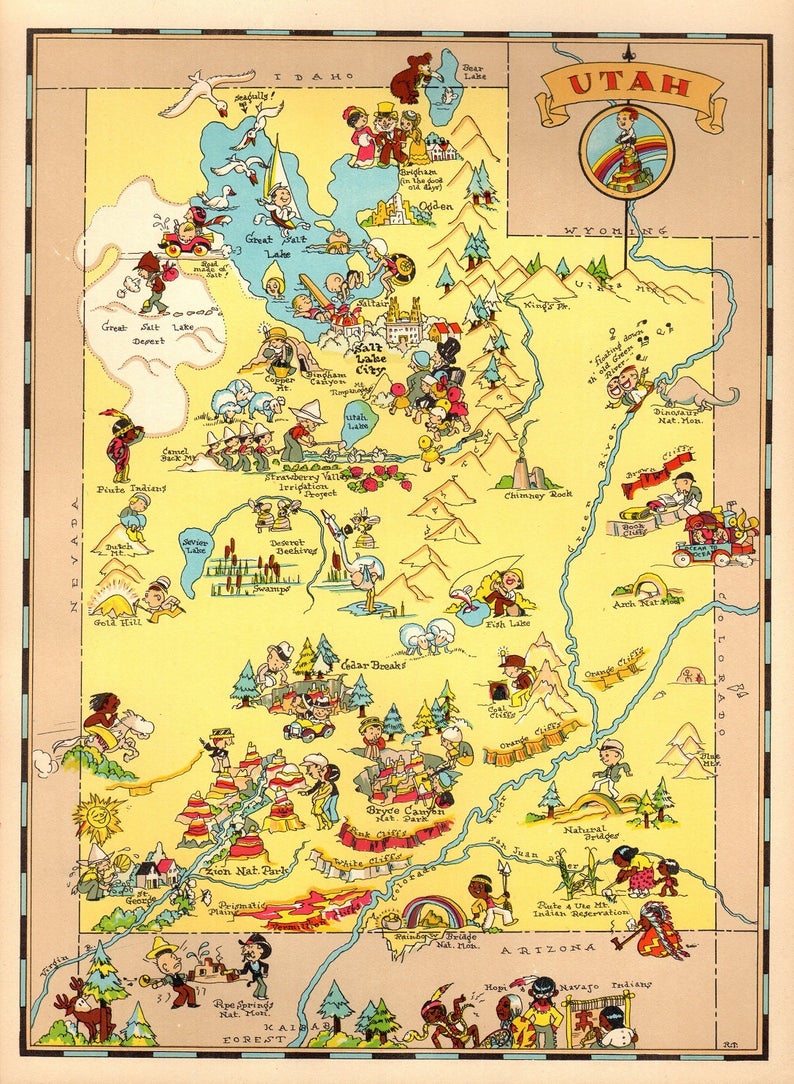
I’ve never been to Utah. Never much wanted to go either. It seemed to me to incorporate most of the bad traits of the American West and not so many of the good. Dry, shapeless arid desert land with the scorching summers of mid-Texas but snowy, cold winters of my homeland to the north. Arid miles broken only by one big lake …which is salty.A huge, mysterious military base conspiracy theorists say took over from “Area 51” when Nevada became too touristy. Besides a few scenic rock arches in the south of the state, not a lot to see and one mid-sized city notable for being the home of the Mormon Church. But maybe I owe the state an apology, because at least politically, it seems to be the shining light for the entire U.S.A.

I’m referring to newfound heroes Spencer Cox and Chris Peterson. Cox is the state’s Lieutenant Governor, Peterson a professor. Both are running for Governor this November. And both have done something revolutionary for the times – they have agreed to be civil, to respect one another and the public as well. They appeared in a couple of TV ads which quite unlike the typical political ad of the day, they smile and tell voters “we can disagree without hating each other.” It seems like it’s so obvious that it shouldn’t need to be said, but alas, this is 2020. So they are revolutionary, and to them I say “amen” and “bravo.”

The pair appeared today on the Today Show and told Savannah Guthrie, controversial host of last week’s discussion with Donald Trump, that they for the most part like each other and respect one another. Both said they would listen to the other on significant issues if elected.

“We can debate each other without degrading the other’s character,” Peterson, the Democrat says. If only the big boys in Washington could take note and do the same. “Our common values transcend our political differences.”

Cox, the Republican, said people “are hungry for decency” and “as our national dialogue continues to decline, my opponent and I decided to try something different. Let’s make Utah an example to the nation.” Both agree that the “peaceful transfer of power (is) integral to what it means to be American.”

Amen to them both for stating the obvious. Or what should be the obvious but in this day and age is not, even to the sitting President.

I don’t know what big issues in Utah state politics are this year and don’t have specifics on what either candidate suggest to rectify the problems. But I know if I was in Utah, I’d be reasonably confidant good solutions to the problems could be achieved and not be too worried whichever candidate won. Either seem like they have the decency and intelligence to make a good governor. Hell, why stop there. With their “radical” way of thinking, I daresay many Americans might not mind having either one in the White House.

Sad to have to say that saying civility and courtesy still matter. But the fact that a Republican and a Democratic opponent are saying so gives me hope for the future of the land.

Mexico’s Improbable Star

Youtube launched the career of Justin Bieber. He was an unknown Canadian kid, putting home videos on the website when he was “discovered” and a year or two later, we all cursed Youtube. But we knew Bieber’s name. It seemed fitting because to many, like me, when you think “Youtube” you think music. The new MTV, a video jukebox of music videos both official, and homemade by fans. But there are of course, a lot more things going on that lure the billion-plus users to the site some five billion times a day!

I for instance am a weather nerd, and have seen countless videos of tornadoes and other storms from the ground captured on video by both professional storm chasers and amateurs who happened to be at the right (or wrong?) place at the right time. My sweetie loves seasonal decorations and has found a whole network of ordinary people who craft and decorate their homes for July 4th, fall, Easter, Guy Fawkes day, Halloween, and of course Christmas. She’s gotten a few good ideas from them and doubtlessly hours of relaxation watching Dollar Tree signs being repainted into something decorative and pumpkins repurposed. Recently the two of us happened upon one of the internet’s most unlikely stars – Dona Angela, a 70 year-old Mexican grandmother.

Angela is an aging farm wife who lives in Michoacan, a rural area of southern Mexico, and speaks no English. She cooks traditional Mexican food in a most rustic way… and has over three million followers!

Remarkably, the Spanish-speaking lady who seemingly has no running water nor kitchen in the house, only began posting videos mid-way through 2019. One of her daughters (her two daughters and husband occasionally show up on her videos to assist, or enjoy her finished food) was a Youtube fan and started recording her mom with the phone and posting the videos. Within two months, the “channel” – De Mi Ranch e Tu Cocina (“from my ranch to your kitchen”) had hit an extraordinary million subscribers. Now it’s well past triple that, and some individual clips, like one for enchiladas have been seen over seven million times.

Dona cooks in what seems to be an outdoor, but partly enclosed kitchen, which revolves around a large wood-fired stove. She uses mainly traditional implements like a molcajete, a stone mortar and pestle she grinds spices and flattens dough on. The tomatoes, peppers, avocadoes and more come from her garden as do, one would suspect, the chickens and pigs that provide most of the meat and occasionally wander by. She says “I don’t use measurements, I just grab with my fingers.” When you’re 70 and have probably been cooking for six of those seven decades, you can probably do that and get good results! Likewise, the cooking temperature is unregulated since it’s just coming from a wood fire in an iron stove. Her one concession to modern times is an electric blender she likes for her sauces. She shows you the ingredients, how she prepares them, how she cooks them up, in a variety of old metal and clay pots and pans, and let’s you know how they turned out … mostly “just like I like it!”. This I, and most of us, know from the subcaptions, since she speaks only Spanish. One video showed her getting Youtube award plaques for hitting first 100 000 then one million subscribers. She opens the boxes and is obviously delighted with, but she and her daughter tell the viewers there’s a congratulatory letter too but neither of them can read it, since it’s in English.

Over the wood fire she creates a mouth-watering assortment of Mexican staples like salsa, mole (a type of soup, not the little critter), napoles or cactus, tortiallas and of course, tamales.

Forbes recently listed her along with Selma Hayek as one of the most influential women in Mexico. One could imagine that with that endorsement, not to mention the Youtube plaques, she could easily turn the fame into a Food Network show and big-selling cookbook. “The Pioneer Woman From South of the Border!” Nor is it hard to cynically wonder if the wood stove and rugged kitchen it sits in aren’t a soundstage, perhaps beside a fancy home with state of the art food processors and microwaves. But that’s not Dona, apparently. Both the Houston Chronicle and NPR have featured her lately, and both failed to be able to get her to speak to them. She will apparently answer a few questions about her cooking, or defend herself to critics who suggest her stove looks dirty or such, but when it comes to mainstream media… and the dollars they represent… she’s a ghost. Making herself a “star”, or getting rich by her recipes isn’t in her plans apparently. Making more tamales and atoles by hand over a fire outside, for her family to enjoy, are.

I think there are a few takeaways from this.

For instance, these days we can become successful on a low budget. Yes, it’s still uncommon, but one can become a well-loved author without having Random House or Penguin backing you; one can become a star musician in your basement with a computer, an instrument or two and video camera. That’s a definite plus to social media, a part of our lives which has its share of negative attributes as well. A 70 year old cooking tamales outdoors in the 1980s would have been known only as far and wide as her crowing roosters could be heard. Now, she can be an international influencer. A tween Justin Bieber singing in his bathroom in the 1970s would have likely been stacking cans of beans at his local Loblaws ten years later, not on magazine covers. I suppose we shouldn’t blame the internet for that…

Secondly, we all have stories to tell and talents to share. You might not be able to cook from scratch, but if you can fix an oil pump or make a nice wreath for your door at Christmas for ten bucks or get rid of a wasp nest in your shed without using toxic sprays, or…well, you get the idea, there are people who’d like to know how. You can make others’ lives better by sharing. Likewise, maybe you have lived through history. Veterans. White House staff. People in the San Francisco earthquake in the ’80s. Firefighters. Best boys on 20th Century Fox sets. All have stories that would be interesting for the rest of us to hear. I bet you do too.

As well, your own family’s history is worth documenting… and there’s no better time than now. Maybe it’s the food you cook, like Angela, maybe it’s the trips you took, maybe it’s the array of cars you owned or the girlfriends/boyfriends you hung out with before you got married… there are a lot of stories there that you might like recalling. And future generations will thank you for. My mom was in London during “the blitz” in World War II. She saw the Queen Mother walking around the rubble talking to people, which probably colored her views on the royal family for life at a very young age. My dad worked with John Kay of Steppenwolf, before he was a rock star in Steppenwolf. So many stories and traditions to share… it might not make for Youtube videos, but that part of your heritage is worth preserving, just like Dona’s old ways of making her own tortillas.

Lastly, be authentic. Be yourself. Dona Angela is. She could wear designer clothes, disguise the wrinkles on her face, flash name brand spices and fancy cookware at the camera. Maybe sip on a Coca Cola with the label front and center in exchange for endorsements, be phoning up the newspapers and public radio for interviews to talk up her web videos. But she does none of that, and her fans love her for it. We already have enough fake “reality” anyway.

Maybe you’ll never get to three million subscribers on Youtube, or 100 000 readers here on WordPress or be on any list made by Forbes. But you do have something to say, and share.

Our Towns – Steinbeck Revisited At 10 000 Feet

My latest read has been Our Towns, a travelogue by James and Deborah Fallows. The 2019 book (a slightly updated version of the original which was released two years prior) owes a lot to a favorite of mine, Travels with Charley by John Steinbeck. It’s an obvious comparison and one the writers acknowledge early on. Both are essentially diaries of jaunts across the length and breadth of the U.S., stopping along the way to see interesting towns and talk to ordinary people. However, for all the obvious similarities, there are differences aplenty too, most obviously the 50+ years which passed between the two.

While Steinbeck famously traveled in his camper-back pickup truck with his faithful dog, James Fallows travels by air, piloting his own small plane, with his faithful wife and writing partner. That in itself leads to some big differences. For instance, while Steinbeck lamented how (even in the early-’60s) cities and landscapes were all becoming homogenized and similar from the road with lookalike fast food places and strip malls, the Fallows wonder at the differences of the landscape from the air. They simplify, for instance by noting that from a plane, the eastern third of the country is forest, the central part nothing but farm fields and the west all desert and mountain, save for a dense cluster of cities along the California coast. The mode of transport also affected how they encountered the land. Steinbeck, driving his own bed and breakfast could move around freely and quickly and often met memorable people at campsites or along the road; the Fallows usually stayed in hotels in their towns and spent a few days exploring, often on foot, talking to educators and business people as often as not.

The Fallows visit a range of cities and towns ranging from tiny – Eastport, Maine, for example, a fishing town and the easternmost point in the country and closer to Canadian cities like Fredericton than the nearest largish American one – to mid-sized ones like Riverside, California and Charleston, WV, and even a couple of large urban areas like Columbus, Ohio. For good measure they also visit a Prairie nature preserve in Montana and a lake in Texas being rehabilitated largely due to the work of rocker Don Henley. The one common thread is that all of the spots they stop at are areas on the move upward; areas which are getting better whether they were not bad to begin with or written off as almost dead and uninhabitable.

They strive to find the small stories of success in those places, and the reasons why. They find some fundamental similarities, but one isn’t political leanings. They note that they stopped in one of the most Liberal towns in America – Bernie Sanders’ home of Burlington, Vermont – and some in the heart of Republican red America, like Dodge City, Kansas. Surprisingly, the successes are similar, and one is an ability of local leaders to put aside national and partisan politics to work together for local good. Allentown, PA for instance, tends to be Republican but went against all “conservative” practises during the recession of the early-2000s and voted to increase local taxes, enabling continuation of the level of social services and policing as well as spend on redeveloping the downtown area. The counter-intuitive strategy worked.

The Fallows find some common threads in the cities doing well. Among them, a good community college training people in job skills that lead to good paying work in the area, a good public library system, public schools which adapt to local situations (whether it’s having expanded ESL classes in areas with high populations of refugees and immigrants or having local high-tech industries bring in people to help work with the kids on real world projects involving science and technology) , and a dedication to reinvigorating the downtowns , which usually leads to a number of cafes, boutiques and art galleries. Art too, is a common denominator, they find, although they admit neither of them were especially artistic types. Cities which thrive have a lively arts scene, from galleries and wall murals on old buildings to small theatre companies.

All that and beer . Yep, local microbreweries or taprooms were the last common feature they found in almost every city they visited; something that improved civic pride, usually resulted in a popular local gathering place and of course, some fine quaffs as well.

Cheers to that, I say, and cheers to the book which is interesting and makes me interested in seeing places I never would have imagined could be interesting, like Charleston and Dodge City. A book I recommend for anyone as entertainment, and to civic leaders for ideas.

The Crown – Story Of Queen Royally Good Drama, Maybe Not Such A Joker Of An Idea?

My sweetie and I have been watching The Crown this past month. We got to the current end of the series and are now counting the days until the new, fourth season begins in November.

For the uninitiated (which would have included me until a few weeks ago), the Crown is a Netflix series based on the life of Queen Elizabeth. Elizabeth II to be precise, there was a previous one some four centuries earlier. The first three seasons begin by seeing her childhood, with her father (George VI) being thrust into the role of king when her uncle David (who was King Edward… don’t ask me why “Edward”) abdicated – quit – to marry a woman the family, and Church of England, didn’t approve of. George VI is a decent-ish man but a chain smoker and he soon dies of lung cancer. In what the country would have considered the ideal situation, he would have had a son, but instead left two daughters, so the eldest, Elizabeth became queen while barely out of her teenage years. Ironically it was a role her younger sister, Margaret coveted and Elizabeth didn’t want, preferring “country life” riding and selling horses. To her, the crown’s something of a burden. Small wonder “crown” and “anchor” are linked together so often.

We see her develop into the role of Queen, come to understand its gravitas but also lose a bit of her own soul and self in doing so. We see her as a steadying presence in a country losing prestige in the world, but also a somewhat powerless one as a succession of prime ministers come and go and make decisions she often disagrees with but puts up with, because, well, that’s what The Crown does. From time to time we see small victories the Queen and her kin have; Margaret securing a huge “bailout” loan from the U.S. after a night of un-regal drinking and dancing with President Johnson in the ’60s, Elizabeth herself nudging a reluctant, frail and failing Winston Churchill into retirement when he was no longer up to the job’s demands. But for the most part, it’s a life and job of sitting politely and doing little. Where we’ve left off, the ’70s are rolling, her son Charles is stuck on Camilla Bowles but Diana hasn’t arrived on the scene and other son Andrew is just a lad, not the infamous “Randy Andy” who befriended Jeffrey Epstein. I’m more than a little curious to see her reaction (at least the show’s interpretation of it) to those events.

It might seem a weird one for me to get hooked on watching. I grew up in Canada, which is part of the “British Commonwealth” but has little real association with the UK these days. Nevertheless, growing up I saw the Queen’s face on every coin I used, most of the paper money and many of the stamps I put on letters… some of which were probably railing about how much I despise seeing a foreign leader on our money! No fan of the monarchy am I. It’s not so much that I ever really had it in for Elizabeth (watching the series only confirms she is an ordinary woman asked to do extraordinary things) but merely the two facts that she was from another country, not mine, and she wasn’t even picked by the people over there! Democracy people! Let the people pick the leaders.

That was how I felt. Now, in this insane year, I might be re-evaluating the idea. Hey, I still have a problem with someone being leader just because of the family they were born into. But I might be coming to see that Britain might have something going there with its two-part balance of power. Like the rest of us, Canada, the U.S., most other “civilized” lands, it still has its elected leader (a prime minister in their case) and the hundreds of elected politicians in Parliament, their equivalent to American Congress. That’s where the real power lies, where laws are made and changed, national budgets set and policies created. But then, quietly sitting there, taking it all in, is the other part, the monarchy. Sitting, politely waving once in awhile, not saying much in public beyond “Happy Christmas” every December 25th.

But, behind the scenes a force which can potentially influence a wayward government and could theoretically, change it. Laws there still give the Queen the “power to appoint and dismiss ministers (as in heads of branches of the government), regulate the Civil Service, issue passports, declare war or make peace, direct the military and negotiate and ratify treaties and alliances.” All that and be the official owner of all the swans in the country! That’s a lot of unused power. And maybe not such a bad system of checks and balances.

It all comes to mind because more and more, it’s becoming apparent that democracy as we know it, although better than the alternatives, isn’t working all that well. Lindsay Graham sits in Washington piously declaring in 2016 that it would be wrong to appoint a Supreme Court judge only nine months before an election and that if it happened in 2020 we should use his words against him. Now he’s blithely declaring they can do so, only six weeks before an election, so they will. And of course, the Democrats don’t shine by warning that if the Republicans follow through on that, they’ll simply expand the court to their advantage as soon as they can. Get your kids to take a high school law class parents, because if it keeps up, by 2028 Supreme Court judge might be one of the big growth jobs. (“Oh yeah, appoint four more judges will you!? Well when we win the next election, we’re going to put in 200 of our friends and make it a court of 213! Bazinga”). My Canada has long had a similar problem with elected government stacking the inexplicably unelected Senate with partisan patsies often quite unqualified for the role.

Add to that a sitting president urging his followers to vote twice – a criminal offense – to scuttle an election and make it null and void and an increasing number of voters getting their info from entirely unreliable sources (mainly social media posts) and one has to wonder where it’s all heading. Suddenly the concept of having an overseeing body watching it all, mainly observing passively, maybe yellling at a few dunces behind the scenes but ready to if necessary pull the carpet out from underneath any government that gets to be too delinquent or self-indulgent might not be a bad idea after all.

Of course,it’s still an unrealistic idea outside of Jolly Ol. They’ve had the concept and the practise of a ruling royal family for centuries and that’s the way it is. Having them requires nothing more than a bit of inertia and the occasional rolling of one’s eyes. Over here, we have no such tradition and needless to say, trying to install one would do little more than perhaps manage to miraculously unite the two polarized parties in Washington in outright frothing anger at the suggestion. Although the Kennedy’s have long been nicknamed “America’s Royal Family”, they aren’t and if we can’t agree on whether it’s OK not to stand during the national anthem or not, we sure as H-E-double- hockey sticks won’t be agreeing to a change of that magnitude. Who would get to be “the crown.”

Unrealistic? Yep. But a starting point in the discussion on how to “fix” democracy perhaps. By the way, I can sit and watch from the sidelines…just sayin’! I wouldn’t mind owning some swans…

The Aliens We REALLY Don’t Want

A few stories over-shadowed by the big ones ( pandemic and social unrest due to racial issues) have caught my attention in the past month or so. Stories about immigrants, of good and bad sorts. It makes me think the U.S. has the right issue but the wrong targets.

My sweetie loves Youtube videos about decorating and crafting and one favorite of hers is a young guy who makes, well, somewhat over-the-top centerpieces, mantel decorations and wreaths using dollar store goods. He’s called Ramon at Home, and even if I don’t share his enthusiasts delight in all his lavish designs and all things burlap, I must admit the young man is quite charismatic. He has a strong Hispanic accent, and he shared a story of how he grew up poor in Mexico and looked forward to nuns coming around with such simple gifts as new toothbrushes and toothpaste. He came to the U.S., taught himself English and now seems to have a beautiful house and thriving online community following him. Lately he’s been spearheading a campaign to get children’s clothes and hats for low-income kids at Christmas. It’s hard not to be inspired by that or get behind a person like that. Of which there are so many in the land.

So it surprised and pleased me to hear of George W. Bush’s upcoming book. Out of Many, One is going to be a book of portraits painted by the former president; 43 different immigrants accompanied by essays he wrote about them. It’ll be his second book of paintings, coming after Portraits of Courage, pictures of U.S. military personnel he painted. You can take that – a book celebrating immigrants to the country – how you will in terms of the commentary about the current government and its policies. Bush says “there are countless ways in which America has been strengthened by the individuals who have come here in search of a better life,” and adds “it should be (an idea) that unites us.”

Right you are, George… and I wouldn’t have guessed I’d be saying that about Mr. Bush’s writings or beliefs about 15 years back. There are stories in the news though that do suggest America has a real problem with immigrants… just not the kind Washington is worried about. Invasive species.

When environmentalists talk, lately “climate change” gets the attention. The spotlight and the hand-wringing and the sparse money that is to go around to implement change is directed towards what Al Gore referred to earlier this century as “Global warming.” But it seems like a number of unwanted visitors are ruining our environment and country a lot faster than a few added degrees on the thermometer ever will.

To start, more Asian hornets have been found this year in Washington state and nearby B.C. in Canada. The giant wasp dubbed “murder hornet” by the media showed up in a few locations last year, found noticed when beekeepers near Seattle and Vancouver found some hives decimated. The 2” long hornet has one of the most powerful stings of any insect, and is said to kill about 50 people a year on average in Japan.

This is disturbing. I have allergies and am at risk around stinging bugs. So too are an increasing number of people. In fact, an average of 62 people a year die from stings in the country annually, and that number has begun to rise sharply in the past decade, according to the CDC. People worry about sharks when they swim or rattlesnakes when they go walking but bees and wasps kill several times more people than those critters combined. An even bigger, more dangerous wasp isn’t going to help that any!

Experts add that the Asian hornets aren’t aggressive… unless you stumble upon their nest… which people undoubtedly will, since they bury their nest underground rendering them more or less invisible until you step on it. But even if their non-aggression is the case, they are concerned that the hornets have a real taste for eating bee heads like we might snack on popcorn. A single one can eliminate a hive of honeybees within a few hours. The repercussions for agriculture could be monumental should they get a foothold, even if only along the Pacific coast.

One of the reasons the number of people being rushed to hospital, and at times dying, from insect stings is a similar story. Although “yellow jacket” is essentially a rather non-scientific generic term for a number of wasps, the ones we usually mean when we say “yellow jacket” – the ones which menace our picnics and have never met a beer or soda they don’t like – are actually European ones brought into the continent in the 1970s. Maybe they came over on ships or planes accidentally as the Asian hornets likely did; maybe some misguided farmers imported a few to try and control other bugs (when a yellow jacket can’t find some McDonald’s or Miller to share with you, they’ll happily chow down on other bugs including smaller wasps). One way or another they started showing up in the Great Lakes region in the mid-’70s. Now they’re considered a major pest as far afield as the towns of Dixie and the Canadian Rockies.

Stinging insects aren’t the only unwanted six-legged intruders. Spotted Lanternflies have been, well, spotted, in Pennsylvania this year. It’s an Asian moth which actually looks quite attractive. But, says the state, if you see one, “it’s imperative to immediately report it (and) kill it! Squash it! These bugs will lay egg masses of 30-50 eggs each.” The adults will not only enourage poisonous mold to develop on the plants, but also eat the leaves and can destroy fields of plants including grapes, apples and hops.

You won’t confuse the spotty moth with another recent Asian arrival – the Ash Borer. That colorful green beetle from Eastern Asia recently showed up in the northeast around 2002 and has managed to do some $280 billion damage so far. “An ecological catastrophe,” the American Forestry Association calls it. The beetles lay their eggs exclusively under ash tree bark, and when the larvae come out, they feed on the wood, quickly killing off the tree. Entire forests of ash trees from Quebec to Kentucky have been wiped out already. Ash is not only one of the most common types of forest tree in the East, providing homes for many birds and animals, it’s a popular shade tree in gardens and commercial one used for lumber (and baseball bats.) One of the suggestions to control them is – I kid you not – to bring in more, different Eurasian wasps to see if they can, because North American wasps aren’t eating them in any appreciable number. More foreign wasps? What could go wrong there?

Of course, the problems aren’t limited to insects. Florida is having to wage war against … pythons! Someone probably had a few Burmese pythons at one time as pets and perhaps thought they were getting too big. They dumped them in the Everglades. Within the past two decades, they’ve multiplied and spread throughout the southern part of the state, growing precariously close to the 26-feet, 200 pounds they can reach in their native southeast Asia, eating almost anything that gets in their way.

While attacks on people are rare, they’re not unknown (and expected to become more common if the numbers keep growing and they invade places like Miami and Orlando in any significant numbers), they’re doing huge amounts of damage to the ecosystem. The babies eat rabbits and rodents, but the adults can eat animals as large as deer! The state says since they’ve been found in Florida, there are 99% fewer raccoons and opossums in the Everglades and adjacent areas, 87% less Bobcats (probably as much because the pythons are eliminating the cats’ food as much as eating the Bobcats although that can happen as well) and lowering bird populations while rabbit and fox populations have almost disappeared. They spent $142 million last year trying to get rid of them, both by directly trying to catch and euthanize, as well as implant radio devices to track them and hopefully root out nesting sites and colonies of the huge reptile. Even though snakes have no legs or arms, so far, it seems the pythons have the upper hand. Although Wild boars, yet another invasive running wild, do sometimes manage to tear them up… along with anything else in their path, plant or animal.

So yep, seems like there is a problem with some unwanted foreigners coming into the country. Only thing is, they’re generally winged, or scaly or furry, not people.

Design a site like this with WordPress.com
Get started